
You blink your eyes, we do the rest! (2026)
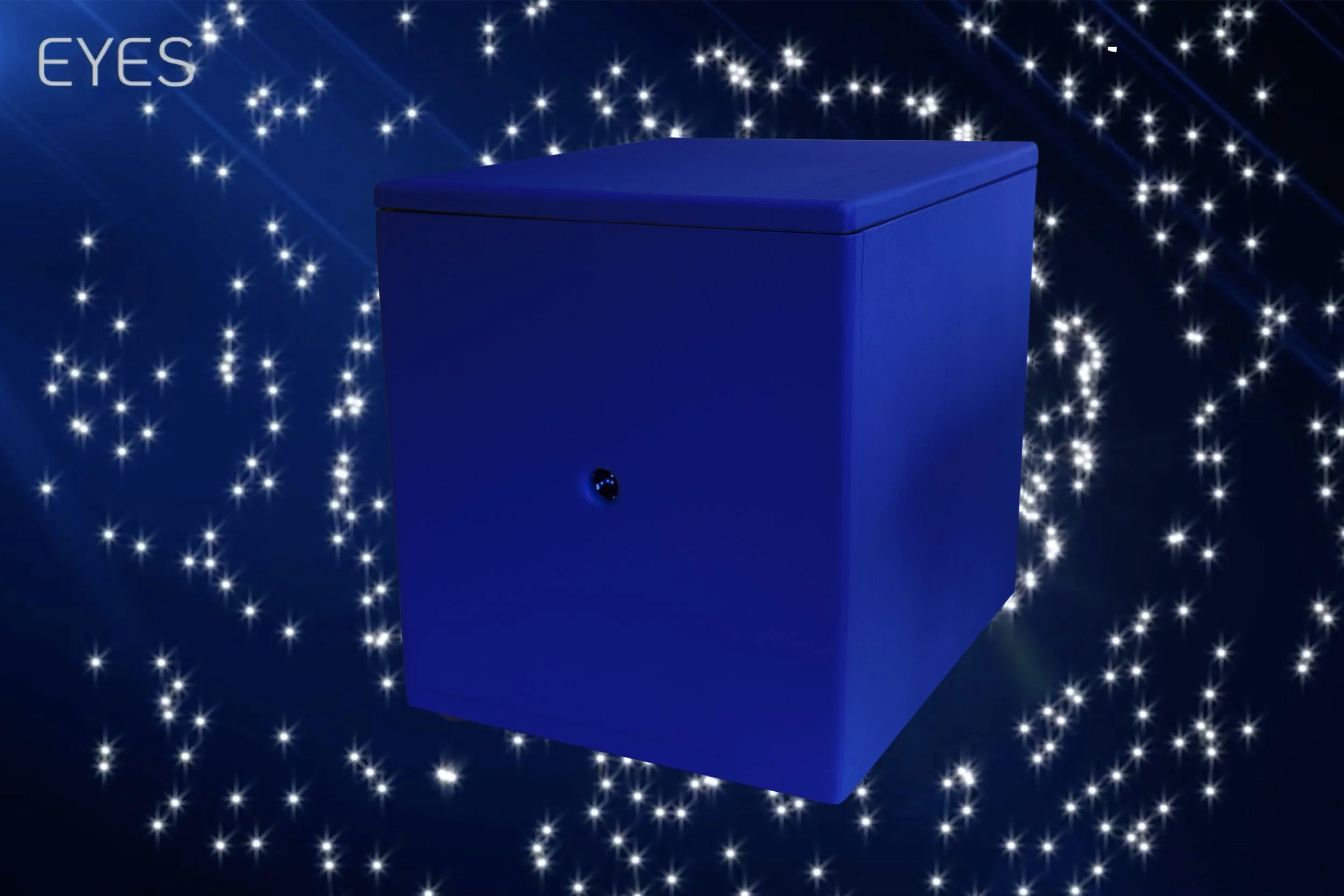
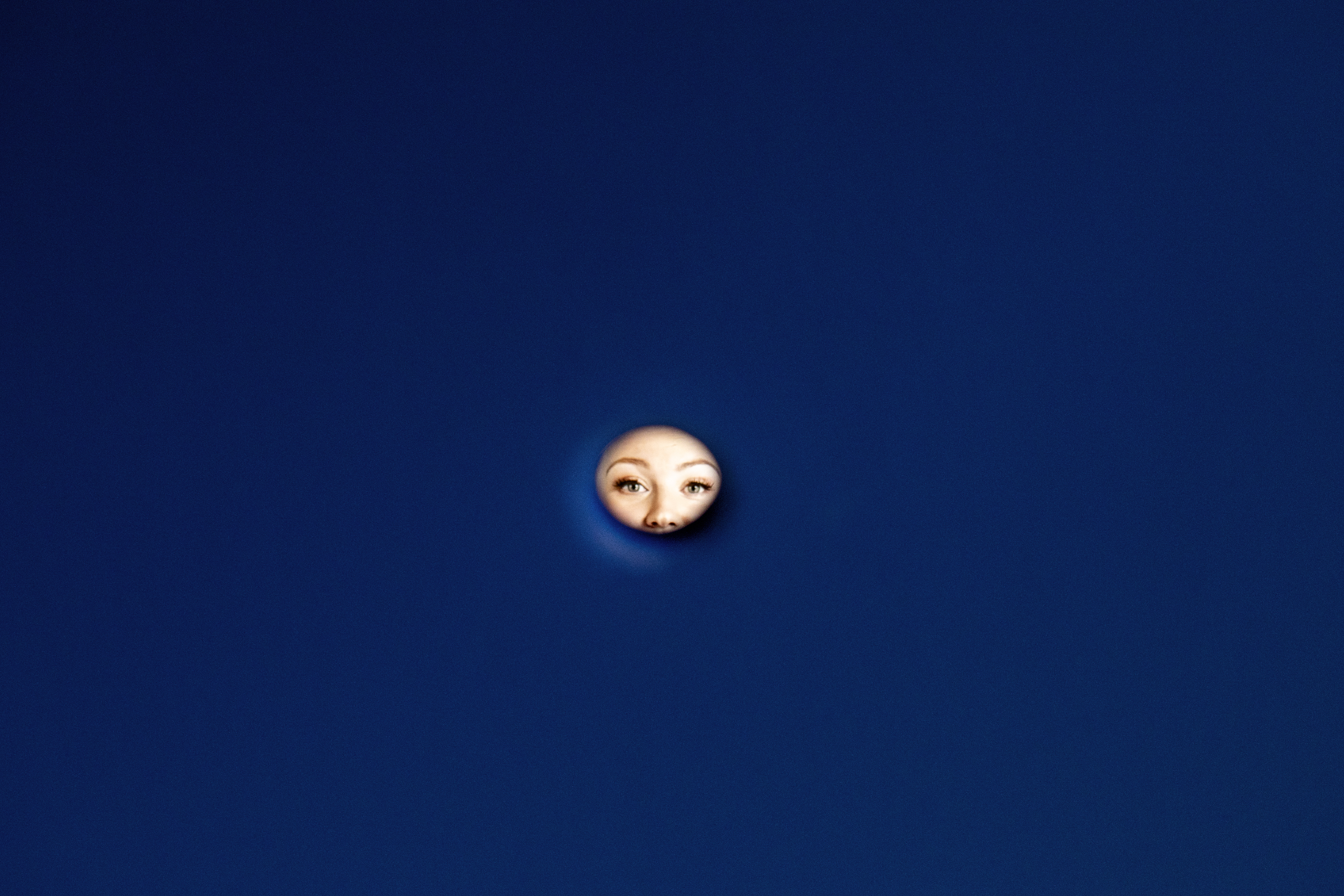
Video sculpture. Digital video, wooden box, tablet, speakers, electronic components.Dimensions: 34 × 34 × 39 cmDuration: 3’11”[EN]
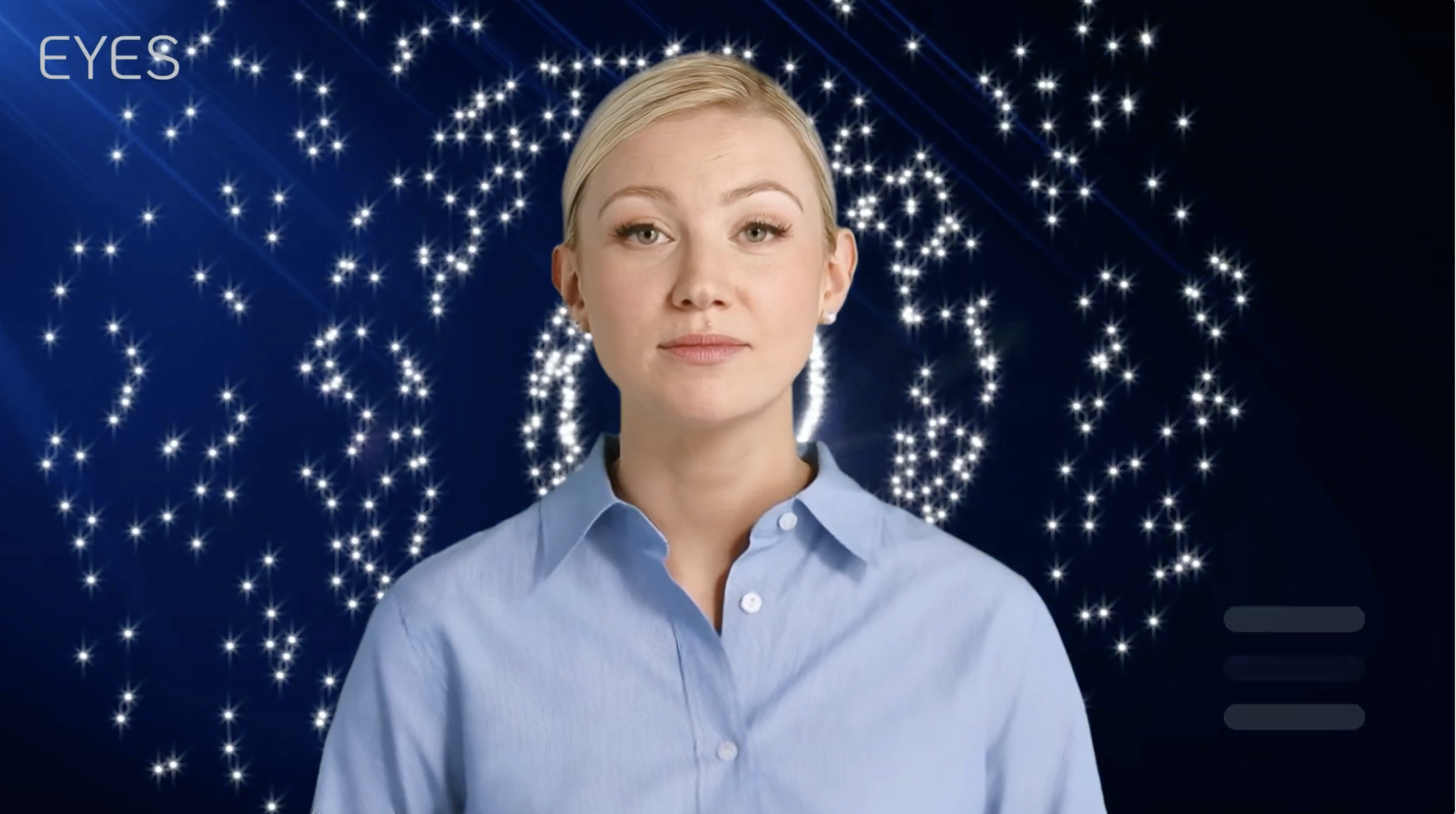
At the end of the nineteenth century and the beginning of the twentieth, photography became democratized: it ceased to be a privilege of professionals and entered domestic life. In 1888, Kodak launched its first camera with the iconic slogan, “You press the button, we do the rest.” The work You Blink Your Eyes, We Do the Rest ironizes this history and projects it into the future. Through a fictional videotutorial for smart contact lenses (EYES: The Ultimate Smart Lenses) the viewer reenacts this historical gesture: activating the machine, which does all the remaining work.
Just as Kodak democratized photography and other technologies were later popularized (computers, mobile phones, virtual or augmented reality glasses), the work proposes the democratization of vision and its consequent technological entanglement, transforming a passive gesture such as blinking into an active and productive experience. However, this apparent autonomy reveals itself as dependence: in order to see, one must subscribe, accept terms and conditions, and surrender data. Vision becomes a service, blinking an interface, and intimacy an exploitable resource. The promise of technological simplification thus conceals an economy of attention and surveillance where, once again, “they do the rest.”
[ES]
A finales del siglo XIX y principios del XX, la fotografía se democratizó: dejó de ser un privilegio de profesionales y se incorporó a la vida doméstica. En 1888, Kodak lanzó su primera cámara con el icónico lema “You press the button, we do the rest”. La obra You Blink Your Eyes, We Do the Rest ironiza sobre esta historia y la proyecta hacia el futuro. A través de un videotutorial de lentillas inteligentes ficticias (EYES: The Ultimate Smart Lenses) el espectador reproduce este gesto histórico: activar la máquina, que hace todo el trabajo restante.
Así como Kodak democratizó la fotografía y otras tecnologías fueron popularizadas posteriormente (ordenadores, móviles, gafas de realidad virtual o aumentada), la obra plantea la democratización de la mirada y su consecuente vinculación tecnológica, transformando un gesto pasivo como el parpadeo en una experiencia activa y productiva. Sin embargo, esta aparente autonomía se revela como dependencia: para mirar hay que suscribirse, aceptar condiciones, ceder datos. La visión se convierte en servicio, el parpadeo en interfaz y la intimidad en recurso explotable. La promesa de simplificación tecnológica esconde, así, una economía de la atención y de la vigilancia donde, una vez más, “ellos hacen el resto”.