
Invisual Routes (2026)
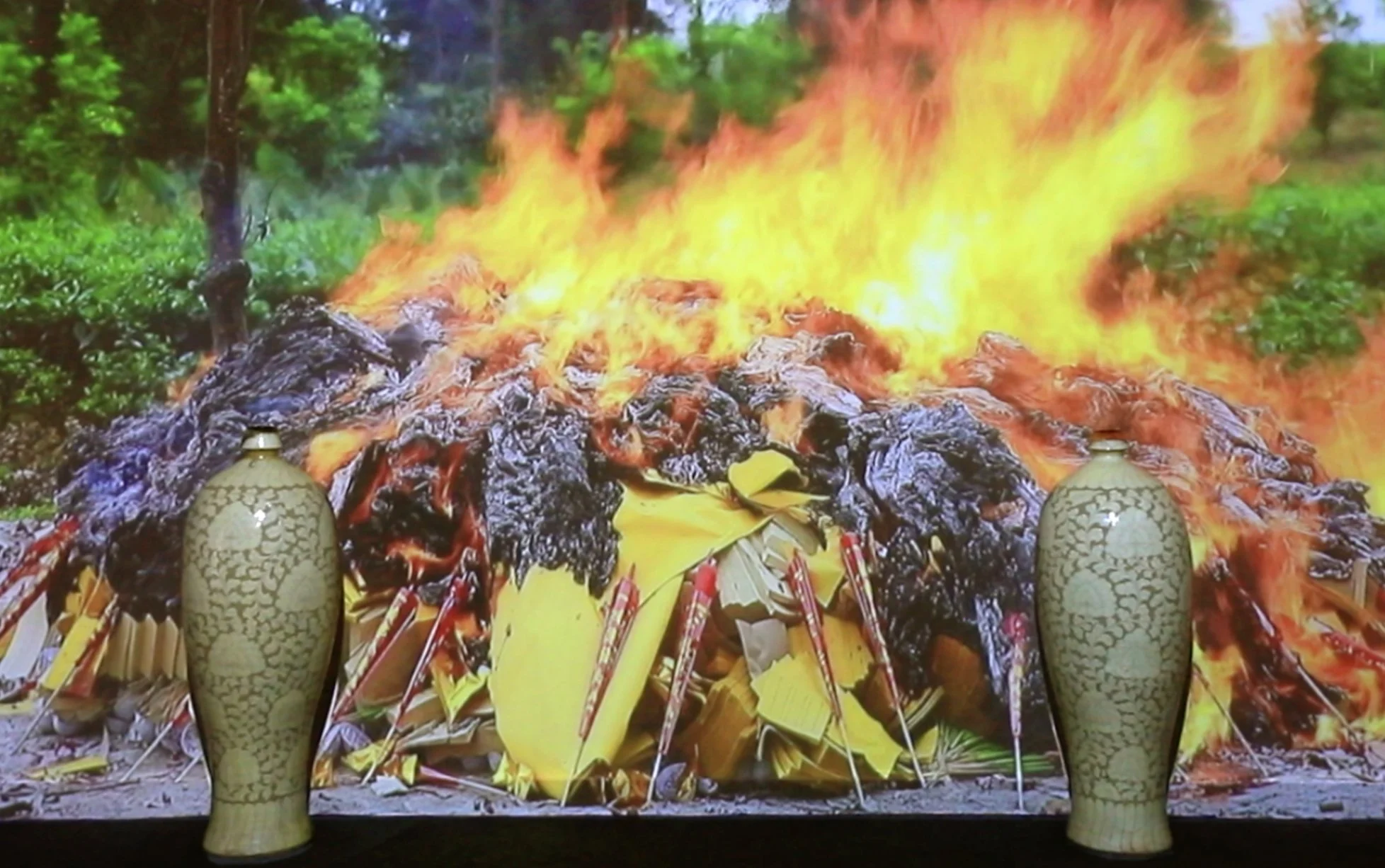
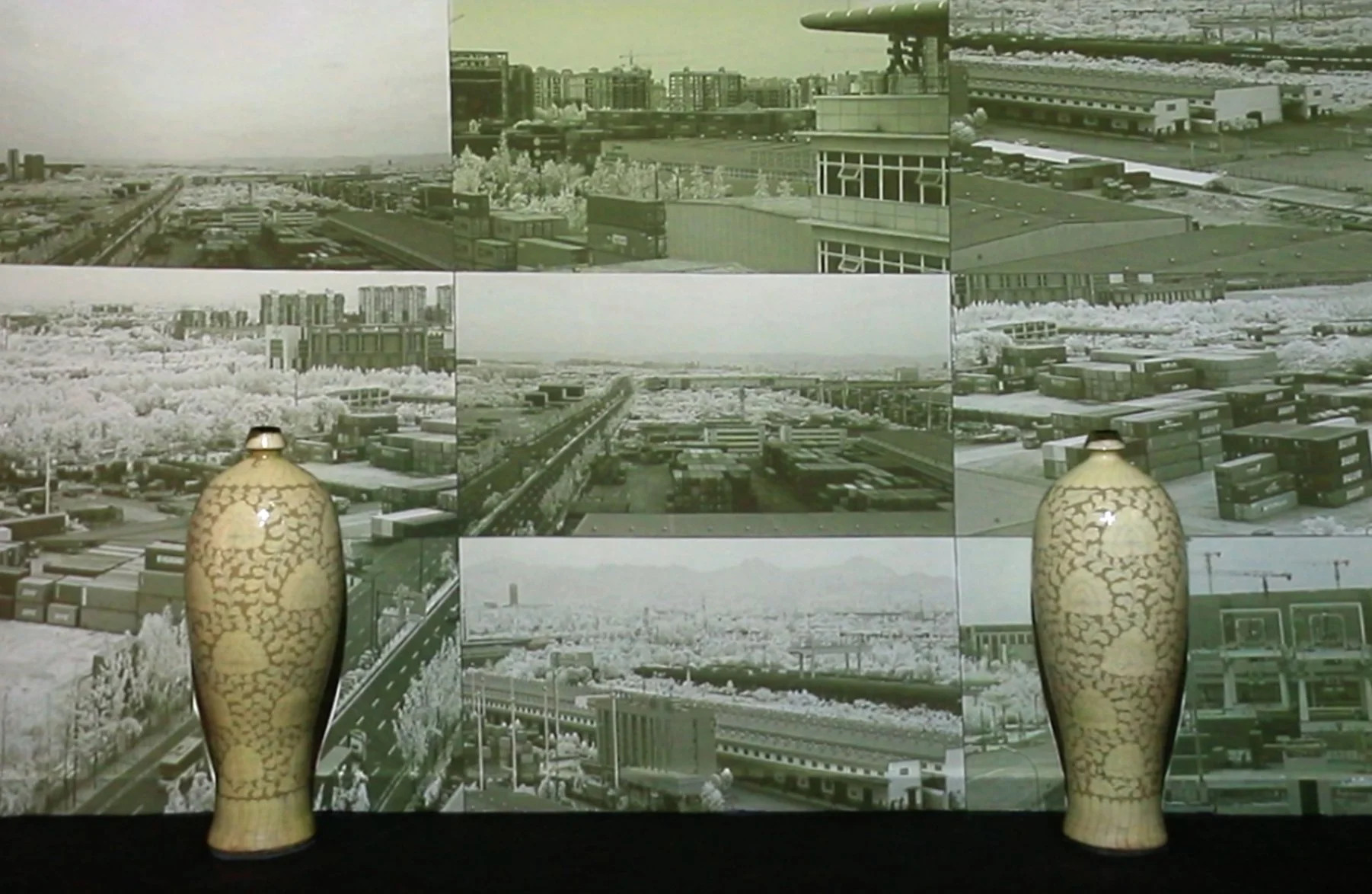
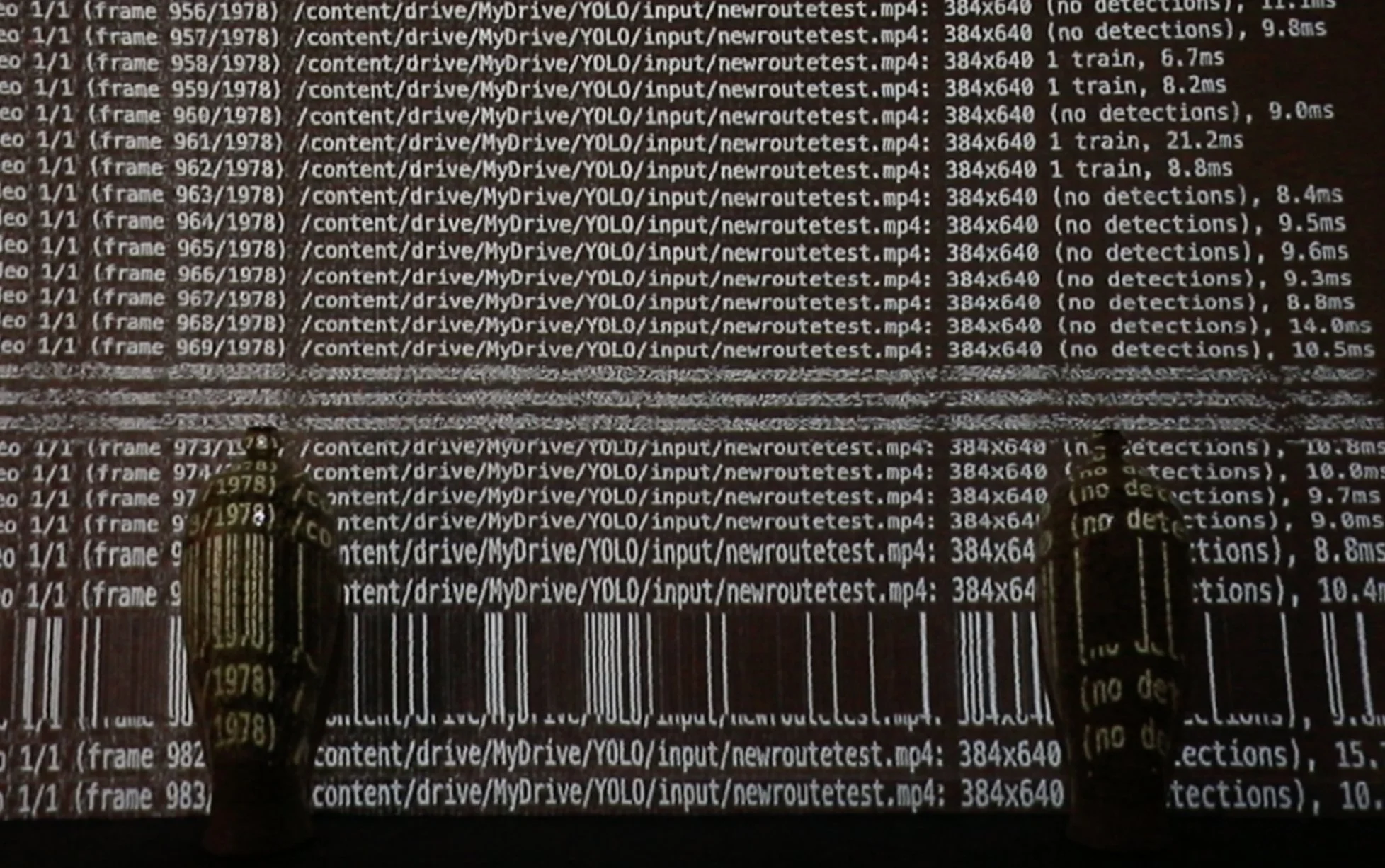
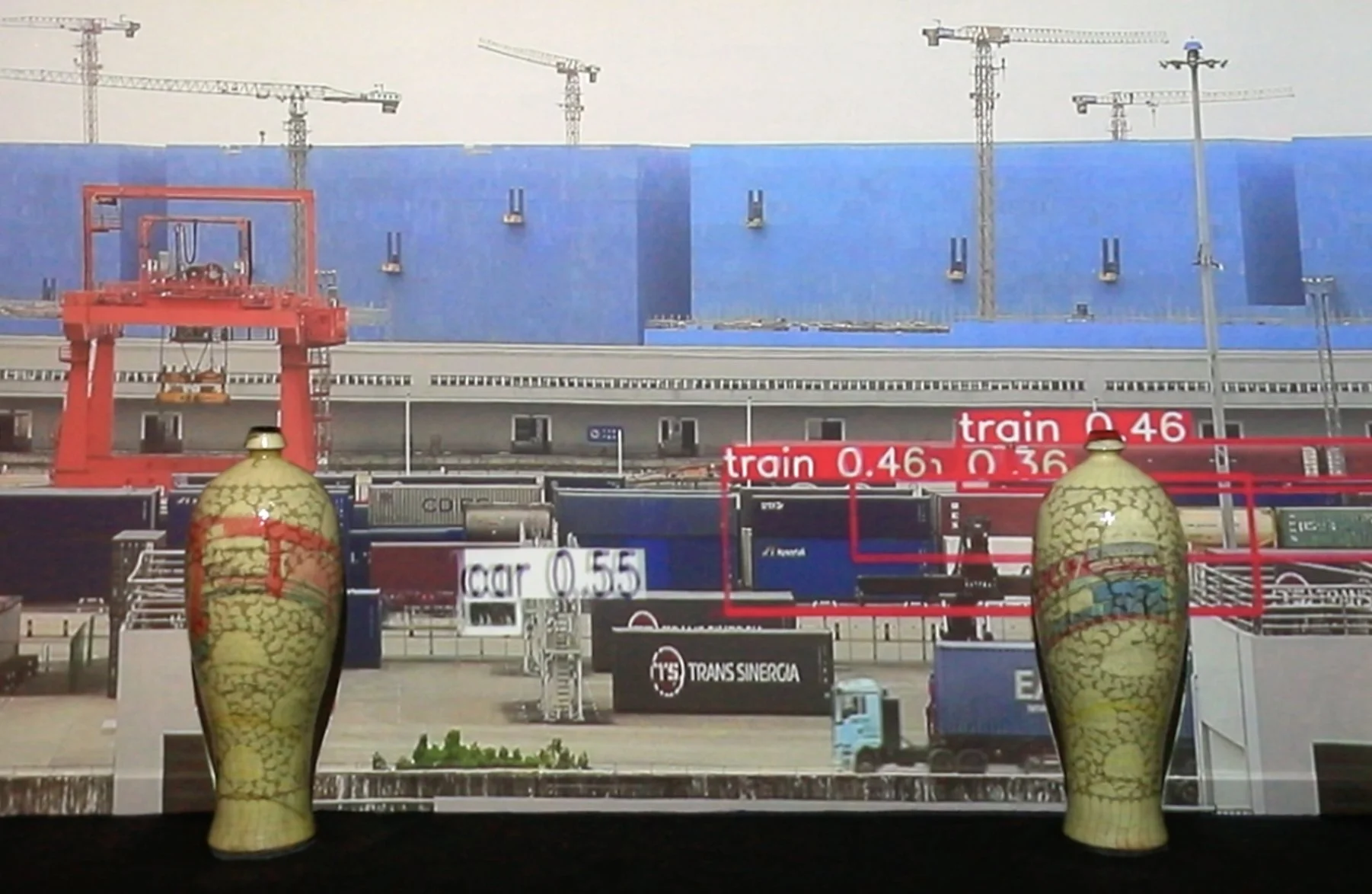
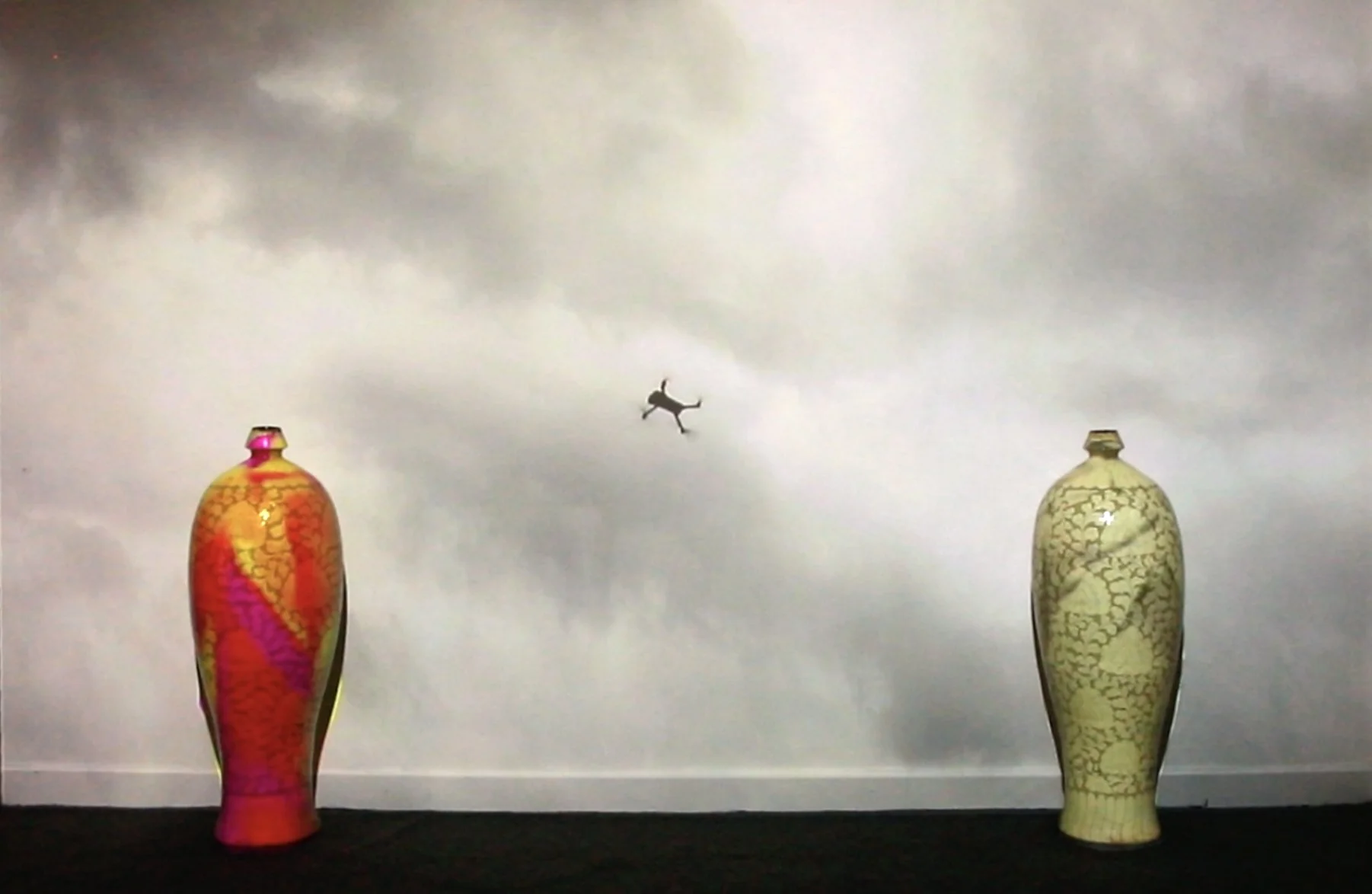
Video mapping installation. Digital video, ceramic vasesDuration: 8’25”Produced during NY20+ residency (Chengdu, China) for VIIAF Festival 2026
[EN]
Invisual Routes explores how contemporary cities and their transport logistics are saturated with invisible visual data –images made not for human eyes, but for machines (traffic cameras, sensors, computer vision in automated systems) and I compare them with their ancient counterparts.
How does the Belt and Road Initiative not only move goods and people but also reorganize the very conditions of visibility? The cameras that monitor these routes are part of a logistics that sorts, categorizes, and manages movement. What happens when you turn those cameras back on the history that precedes them, on the stone paths that were once the "infrastructure" of a different kind of circulation?
For the contemporary logistical corridors, infrared and thermal cameras capture the invisible machine gaze. Along the ancient Silk Road paths and traditions, a conventional visible-light camera records the landscape as it was once seen by humans, horses, and mountains alone. These two visual regimes are then superimposed: the machine vision overlaid upon the human-scale view of the old stone routes. The resulting composite images will be projected onto ancient ceramic vessels in the exhibition space, creating a dialogue between historical and contemporary circulation of goods.
[ES]
Invisual Routes explora cómo las ciudades contemporáneas y su logística de transporte están saturadas de datos visuales invisibles —imágenes creadas no para ojos humanos, sino para máquinas (cámaras de tráfico, sensores, visión artificial en sistemas automatizados)— y las comparo con sus equivalentes antiguos.
¿Cómo la Iniciativa de la Franja y la Ruta no solo mueve mercancías y personas, sino que también reorganiza las propias condiciones de visibilidad? Las cámaras que vigilan estas rutas forman parte de una logística que clasifica, categoriza y gestiona el movimiento. ¿Qué ocurre cuando se vuelven esas cámaras hacia la historia que las precede, hacia los caminos de piedra que fueron en su día la "infraestructura" de otro tipo de circulación?
Para los corredores logísticos contemporáneos, las cámaras infrarrojas y térmicas capturan la mirada invisible de la máquina. A lo largo de los antiguos caminos y tradiciones de la Ruta de la Seda, una cámara convencional de luz visible registra el paisaje tal como lo vieron en su momento los humanos, los caballos y las montañas, en solitario. Estos dos regímenes visuales se superponen después: la visión de la máquina sobrepuesta a la mirada a escala humana de las antiguas rutas de piedra. Las imágenes compuestas resultantes se proyectarán sobre vasijas de cerámica antiguas en el espacio expositivo, creando un diálogo entre la circulación histórica y contemporánea de mercancías.